

How to Label Boxes for Quick Identification and Make Moving Day Easier
Moving to a new home can be exciting, but finding your belongings after everything has been packed into dozens of cardboard boxes can quickly become frustrating. Learning how to label boxes for quick identification means creating a clear, organized labeling system that helps you recognize what is inside each box, where it belongs, and how it should be handled. With the right labels, you can unpack more efficiently, protect fragile items, and avoid opening multiple boxes just to find one essential item.
Whether you are moving from an HDB flat to a condominium, relocating to another home in Singapore, or preparing for an office move, proper box labeling can make a meaningful difference. A simple system using room names, box numbers, color codes, and contents can turn a chaotic moving day into a more manageable experience.
In this guide, we will explore practical labeling techniques, common mistakes to avoid, and a step-by-step method you can use before your professional movers arrive.
Why Is Labeling Moving Boxes Important?
Labeling moving boxes helps you identify and organize your belongings without needing to open every container. A well-labeled box tells you what it contains, which room it belongs to, and whether it needs special handling.
Imagine arriving at your new home after a long day of moving. You need your phone charger, toiletries, and a fresh change of clothes, but every box looks identical. Without clear labels, finding those essentials can take much longer than expected.
A consistent labeling system solves this problem by making your belongings easier to locate.
Key benefits of labeling boxes
- Faster unpacking: Identify the boxes you need without opening them one by one.
- Better room organization: Movers can place boxes in the correct rooms.
- Improved item protection: Fragile and heavy boxes can be marked appropriately.
- Less stress: You can locate essential belongings more easily.
- Easier inventory tracking: Numbered boxes make it simpler to check whether everything has arrived.
- More efficient relocation: A clear system supports a smoother packing and unloading process.
Labeling is particularly useful for larger moves, where furniture, household items, kitchenware, clothing, and personal documents may be packed into separate containers.
1. Choose a Clear Labeling System Before You Start Packing
The easiest way to label boxes for quick identification is to decide on a system before you begin. Instead of writing random descriptions on each box, use the same information format throughout your move.
A good labeling system should answer three basic questions:
- What is inside the box?
- Where should the box go?
- Does the box require special handling?
For example, a label that says Kitchen provides some information, but a more detailed label gives you a better overview.
| Label element | Purpose | |
|---|---|---|
| Room | Kitchen | Identifies the destination |
| Box number | K-03 | Supports inventory tracking |
| Contents | Plates and bowls | Explains what is inside |
| Priority | Open first | Identifies essential items |
| Handling | Fragile | Highlights items requiring care |
You do not need to write a long description on every box. A few consistent details are enough to make the contents easier to identify.
Pro Tip: Keep your labeling method simple
Choose one system and use it across the entire move. If you combine room names, different numbering styles, and unclear abbreviations, it may become harder to understand the labels later.
2. Use Color Coding to Identify Rooms Quickly
Color coding is one of the most practical ways to improve box identification. Assigning a different color to each room allows you to recognize the destination of a box at a glance.
For example:
- Blue: Bedroom
- Green: Kitchen
- Yellow: Living room
- Purple: Bathroom
- Orange: Home office
You can use colored stickers, masking tape, markers, or printed labels. The method does not matter as much as keeping it consistent.
Example of a room-based color system
Bedroom
Blue labels — B-01, B-02
Kitchen
Green labels — K-01, K-02
Living Room
Yellow labels — L-01, L-02
Bathroom
Purple labels — BA-01, BA-02
Color coding can make it easier for movers and family members to recognize where boxes should be placed. However, do not rely on color alone. Include written room names as well, because colors may be difficult to distinguish in poor lighting or for people with color-vision differences.
3. Write the Room Name and Contents on Every Box
A common moving mistake is labeling a box only with the name of the room. Although this tells you where the box belongs, it does not explain what is inside.
For example:
- Basic label:
Kitchen
- More useful label:
Kitchen — K-03 — Plates, bowls, and mugs
The second label provides more information and helps you decide which boxes to unpack first.
What should you write on the label?
For most household boxes, include:
- Room destination: Kitchen, bedroom, living room, or office.
- Box number: Use a unique identification code.
- Main contents: Describe the most important items.
- Special instructions: Fragile, heavy, or keep upright, when applicable.
- Unpacking priority: Mark essential boxes that should be opened first.
Avoid listing every individual item if it makes the label too long. Instead, write a short summary such as winter clothes, towels, and bedding.
4. Number Your Boxes to Track Your Belongings
Room labels explain where a box belongs, but numbering helps you keep track of how many boxes you have packed and moved.
A numbering system is especially useful when moving between apartments, storing belongings temporarily, or working with a professional moving team.
How to create a box numbering system
Use a room abbreviation followed by a number.
| Room | Example box numbers |
|---|---|
| Bedroom | B-01, B-02, B-03 |
| Kitchen | K-01, K-02, K-03 |
| Living room | L-01, L-02 |
| Office | O-01, O-02 |
The numbering can be restarted for each room, as shown above. Alternatively, you can use one continuous sequence from 001 to 050. Choose the approach that is easiest for your household.
Create a simple inventory checklist
A spreadsheet or written list can help you record box details.
| Box ID | Room | Contents | Priority |
|---|---|---|---|
| K-01 | Kitchen | Cooking utensils | Medium |
| K-02 | Kitchen | Plates and glasses | High |
| B-01 | Bedroom | Bedding | High |
| L-01 | Living Room | Books | Low |
You can record additional information such as fragile items, estimated weight, or whether a box has been unloaded. Keep the inventory accessible on your phone or as a printed document.
Pro Tip: Photograph valuable or fragile items before packing and keep any relevant inventory records separately. This can help you check the condition and contents of your belongings.
5. Mark Fragile, Heavy, and Essential Boxes Clearly
Not every box should be handled in the same way. Some contain glassware, electronics, artwork, or other delicate belongings, while others contain heavy books or kitchen equipment.
Clear handling labels help communicate these differences during loading, transportation, and unloading.
Common handling labels
FRAGILE
For breakable items such as glassware and ceramics. Use appropriate protective packing materials as well.
HEAVY
Indicates that the box requires attention during lifting and stacking.
OPEN FIRST
For essentials such as toiletries, chargers, basic clothing, and important daily-use items.
Labels alone do not guarantee safe handling. Fragile items still need suitable cushioning, secure packing, and proper loading procedures. Heavy objects should be packed in appropriately sized containers that can be handled safely.
For valuable or delicate possessions, discuss handling requirements with your moving provider before the move.
6. Place Labels on Multiple Sides of the Box
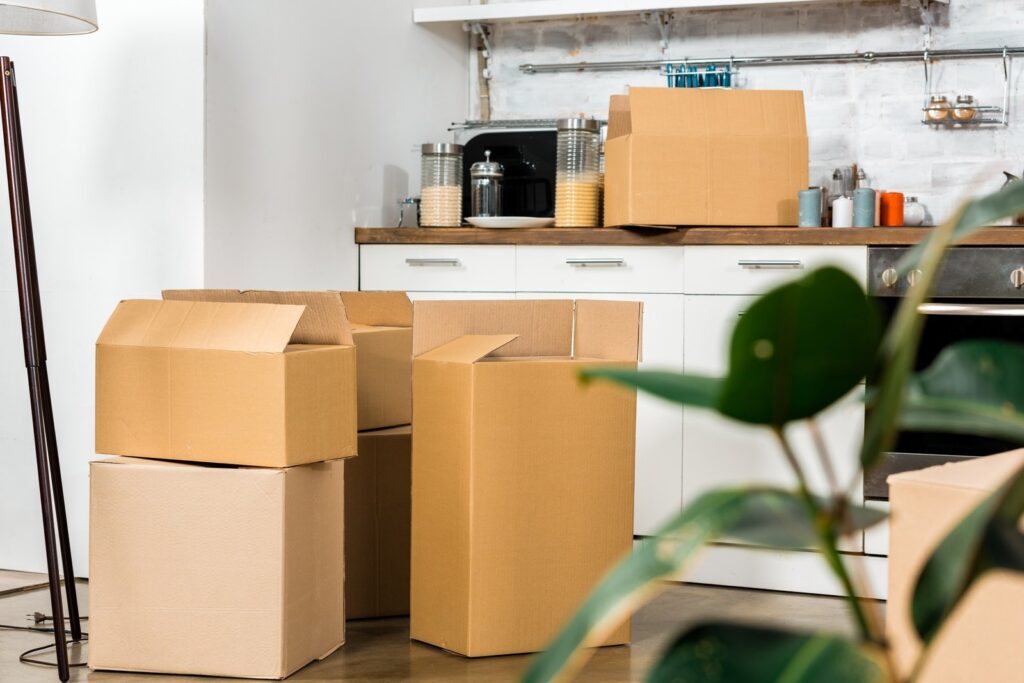
One overlooked technique when learning how to label boxes for quick identification is placing the label where it can be seen after stacking.
If you only write on the top of the box, the label may become hidden when another box is placed above it. This is especially inconvenient when boxes are stacked in a storage area or against a wall.
Recommended label placement
- Top: Useful when boxes are placed side by side or viewed from above.
- Front: Helps identify the contents when boxes are stacked.
- Side: Provides another visible reference when boxes are arranged closely together.
For larger boxes or boxes that may be rotated during handling, labeling two sides and the top can be useful.
Box labeling placement
Use readable labels on visible surfaces. The illustration is a simplified example, not a required box design. Make sure labels are securely attached and written in a way that remains readable throughout the move.
7. Use Waterproof and Durable Labels When Necessary

Moving boxes may be exposed to moisture, condensation, or accidental spills. A label that becomes unreadable can make identification much more difficult.
For items that need additional protection, consider:
- Waterproof adhesive labels.
- Permanent markers suitable for cardboard.
- Printed labels with protective tape.
- Reusable plastic tags for storage containers.
- Clear tape over paper labels where appropriate.
Avoid using labels that peel off easily or writing in a location that is likely to be damaged by handling.
For boxes containing important documents or items that should remain dry, use suitable packaging in addition to durable labels. Labeling cannot replace protection from moisture.
8. Create an Essential Box for Moving Day
One of the most useful ways to apply a labeling system is to prepare a dedicated essential box or moving-day survival kit.
This box should contain items you may need immediately after arriving at your new home. Instead of packing these items into different rooms’ boxes, keep them together and mark them clearly.
What to include in an essential box
- Phone chargers and power adapters.
- Toiletries and basic hygiene products.
- A change of clothes.
- Towels.
- Basic cleaning supplies.
- Drinking water and simple snacks.
- Essential medications that you normally use, stored appropriately.
- Important documents, kept secure and separate when necessary.
Label the box with OPEN FIRST and make sure it is easily accessible. You can also keep a small personal essentials bag with you rather than placing everything in the moving truck.
Why this matters
After a long moving day, you may not want to unpack every bedroom and bathroom box immediately. Having essential items ready allows you to settle in while unpacking the rest of your belongings at your own pace.
9. Coordinate Your Labeling System with Professional Movers
If you are working with professional movers, explain your labeling system before the moving day. This helps establish a shared understanding of where boxes should go and which items need special attention.
For a moving company such as Jean Movers, communication about the contents, destination, and handling needs of your belongings is an important part of planning a relocation.
Before hiring packing or moving services, it is useful to review the questions to ask when hiring packers so you can clarify the scope of packing assistance and expectations for your move.
Information to communicate to your moving team
| Information | Why it matters |
|---|---|
| Room destination | Helps direct boxes to the right area |
| Fragile contents | Identifies items requiring careful handling |
| Heavy boxes | Helps communicate lifting and placement needs |
| Essential boxes | Makes priority items easier to locate |
| Special items | Allows discussion of appropriate handling requirements |
Keep in mind that your labeling system should complement, not replace, the moving company’s own safety procedures and instructions.
10. Common Mistakes to Avoid When Labeling Moving Boxes
Even a simple labeling process can become ineffective if the information is inconsistent or difficult to read.
Mistake 1: Using vague labels
Writing only “Stuff” or “Miscellaneous” does not provide much useful information. Better approach: Write a room name and a short description, such as Living Room — Books and Photo Frames.
Mistake 2: Labeling only the top of the box
Top-only labels can be hidden when boxes are stacked. Better approach: Label at least two visible sides, with the top included when practical.
Mistake 3: Forgetting fragile items
A box containing glassware should not look identical to a box of towels. Better approach: Add a clear fragile marking and use appropriate protective packaging.
Mistake 4: Making labels too small
Tiny handwriting may be difficult to read in a busy moving environment. Better approach: Use large, clear lettering and sufficient contrast.
Mistake 5: Changing the labeling system halfway through
If some boxes use room colors while others use unclear abbreviations, identification becomes harder. Better approach: Decide on a consistent system and use it throughout the move.
Mistake 6: Failing to record important boxes
Without an inventory, you may not know whether all boxes have arrived. Better approach: Use a box number and a simple checklist to track your belongings.
11. A Step-by-Step Box Labeling Checklist
Here is a practical process you can follow while preparing your move.
Moving box labeling checklist
Track your preparation
0/9Choose room colors or abbreviationsPrepare labels, markers, and tapeAssign a unique number to each boxWrite the room and main contentsMark fragile, heavy, or priority boxesAttach labels to visible sidesRecord box numbers in an inventoryCheck labels before loadingKeep essential boxes accessibleReset Checklist
Use this checklist as a starting point and adjust it according to the size of your home, number of boxes, and specific moving requirements.
12. Pro Tips for Faster and More Organized Unpacking
A well-labeled box is useful, but combining labeling with a few practical habits can make your move even more efficient.
Pro Tip 1: Pack room by room
Avoid mixing items from several rooms into one box unless there is a practical reason. Keeping belongings grouped by destination makes unpacking easier.
Pro Tip 2: Place frequently used items in accessible locations
Mark essential boxes and ask your moving team to keep them accessible where possible. This can help you find daily necessities without moving multiple boxes.
Pro Tip 3: Use consistent abbreviations
For example, always use BR for bedroom and KT for kitchen if you choose abbreviations. Avoid switching between several different codes.
Pro Tip 4: Keep valuables and important documents secure
Some items should remain with you or be handled according to specific safety and security requirements. Discuss any special arrangements with your moving provider before transportation.
Pro Tip 5: Take a photo of the inventory
A digital photo or spreadsheet can help you quickly review your box list without searching through handwritten notes.
Conclusion: Label Your Moving Boxes for a Smoother Relocation with Jean Movers
Learning how to label boxes for quick identification is a simple but valuable part of moving preparation. By using clear room names, box numbers, color codes, handling instructions, and an inventory checklist, you can make your belongings easier to locate and your unpacking process more organized.
The key is consistency. You do not need an overly complicated system; you simply need labels that are easy to read and provide the right information when you need it.
If you are planning a home or business relocation in Singapore, professional moving assistance can help you organize the logistics of your move. Visit Jean Movers to explore moving services and contact the team about your relocation requirements. Discuss your packing needs, handling considerations, and moving schedule in advance so you can prepare for a more coordinated moving experience.
A little preparation before moving day can save you considerable time when it is finally time to unpack.
Frequently Asked Questions
What is the best way to label moving boxes?
Use the room name, box number, and a short description of the contents. Add handling instructions when needed.
Should I label every side of a moving box?
Labeling two visible sides and the top, when practical, helps you identify boxes even when they are stacked.
Are color-coded moving labels useful?
Yes. Color coding can make room identification faster, but written room names should also be included.
How do I mark fragile moving boxes?
Write “FRAGILE” clearly and use suitable protective packing materials. Communicate handling requirements to your moving team.
Should I number all my moving boxes?
Numbering boxes helps you track your belongings and maintain a simple inventory during loading, transportation, and unpacking.