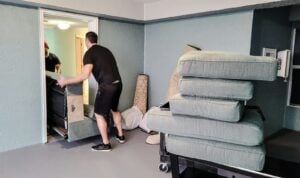

Bulky item removal in Jurong West refers to the process of collecting, handling, transporting, and disposing of large or heavy household and commercial items that are difficult to move without professional assistance. These items can include old sofas, wardrobes, mattresses, cabinets, tables, appliances, and other oversized belongings.
For residents and businesses in Jurong West, bulky items can quickly become a problem when moving house, renovating, downsizing, or simply clearing unused belongings. Unlike ordinary household rubbish, large furniture and appliances often require careful handling, suitable transportation, and proper disposal planning.
A practical removal process should therefore answer three simple questions:
- What items need to be removed?
- How can they be moved safely?
- Where should they go after collection?
For many people, the challenge is not deciding what to remove. The difficult part is getting a heavy wardrobe down the stairs, moving a large sofa through a narrow doorway, or transporting several unwanted items without damaging the property.
That is where a structured bulky item removal service can make the process considerably easier.
What Does Bulky Item Removal in Jurong West Include?
Bulky item removal generally covers the handling and transportation of large household or commercial belongings that cannot easily be placed in normal waste disposal arrangements.
Typical examples include:
- Sofas and sectional couches
- Beds and mattresses
- Large wardrobes
- Dining tables and chairs
- Cabinets and shelving units
- Office desks
- Filing cabinets
- Large household appliances
- Unwanted furniture
- Oversized household items
- Items left after renovation or relocation
The exact items accepted can vary between service providers, so it is important to confirm the removal scope before booking.
Why Are Bulky Items More Difficult to Remove?
Size and weight are only part of the problem.
A large item may also need to be:
- Disassembled before removal
- Wrapped to protect walls and floors
- Carried through narrow corridors
- Transported using an appropriate vehicle
- Handled by more than one person
- Taken to an appropriate disposal or recycling destination
For example, an old wardrobe may appear straightforward to remove. However, once it reaches a narrow staircase or lift, its size can become a serious logistical issue.
When Do You Need Bulky Item Removal?
You do not necessarily need bulky item removal only when moving house. There are several situations where professional assistance can be useful.
1. Moving to a New Home
Moving is one of the most common reasons for removing large belongings.
Instead of transporting every old item to your new property, you may decide to remove furniture that no longer fits your lifestyle or the new home’s layout.
This can make the actual relocation more efficient.
2. Decluttering Your Home
A home can gradually accumulate furniture and belongings that are no longer being used.
Perhaps there is an old sofa occupying an entire corner of the living room, or a wardrobe that has not been opened for years.
Removing these items can create:
- More usable floor space
- Easier movement around the home
- A cleaner appearance
- Better organisation
- More flexibility for new furniture
3. Renovation or Home Makeover
Renovation often creates a surprisingly large amount of unwanted furniture.
Before contractors begin work, homeowners may need to clear existing:
- Cabinets
- Tables
- Shelves
- Beds
- Sofas
- Storage units
Removing these items before renovation starts can help create a safer and more accessible working environment.
4. Downsizing
When moving from a larger property into a smaller home, keeping every piece of furniture may not be practical.
A smaller living space may require careful selection of what stays and what goes.
Bulky item removal can therefore become part of the downsizing process.
5. Office or Commercial Clearance
Bulky removal is not limited to residential properties.
Businesses may also need assistance when:
- Relocating offices
- Replacing old furniture
- Renovating commercial spaces
- Closing a workplace
- Reducing storage requirements
Office desks, chairs, cabinets, shelves, and other large items can become difficult to handle when there are dozens of them.
How to Prepare for Bulky Item Removal in Jurong West
Good preparation can make the removal process faster and safer.
Step 1: Make an Item List
Start by walking through the property and identifying everything that needs to go.
Create a simple list such as:
| Item | Quantity | Approx. Size | Location | Special Handling |
|---|---|---|---|---|
| Sofa | 1 | Large | Living room | May require 2 people |
| Wardrobe | 2 | Large | Bedroom | Possible disassembly |
| Mattress | 2 | Queen | Bedroom | Wrap before transport |
| Cabinet | 1 | Medium | Study | Heavy |
This makes it easier to explain your requirements when requesting a quotation.
Step 2: Measure Large Items
Measure oversized furniture whenever possible.
Important measurements include:
- Width
- Height
- Depth
Also check the width of doors, corridors, stairways, and lifts.
A piece of furniture may fit comfortably inside a room but be difficult to move through the doorway.
Step 3: Clear the Access Route
Remove small objects from the pathway.
For example:
- Shoes
- Decorative items
- Small tables
- Boxes
- Rugs
- Children’s toys
A clear route reduces the chance of trips, scratches, or accidental damage.
Step 4: Separate Personal Belongings
Before removing furniture, check drawers, shelves, cupboards, and storage compartments.
It is surprisingly easy to leave behind:
- Documents
- Keys
- Jewellery
- Electronics
- Small valuables
- Personal photographs
Always empty furniture before it is moved.
What Happens During a Professional Bulky Item Removal?
A well-organised removal process can be understood as a simple sequence.
Assessment → Preparation → Safe Handling → Transportation → Disposal/Collection
This process helps ensure that the item is handled correctly from the moment it leaves the property until the removal is completed.
Safe Handling Matters
Large furniture can be awkward even when it is not extremely heavy.
Professional movers can assess factors such as:
- Item dimensions
- Weight distribution
- Doorway access
- Staircase conditions
- Lift availability
- Number of workers required
- Suitable transport arrangements
This is particularly important for items such as large wardrobes, sofas, cabinets, and solid-wood furniture.
Bulky Item Removal vs. Ordinary Household Waste
One common mistake is assuming that every unwanted item can simply be treated as normal household rubbish.
The two situations are different.
| Bulky Item Removal | Ordinary Household Waste |
|---|---|
| Large furniture | Food waste |
| Mattresses | Packaging |
| Wardrobes | Small household rubbish |
| Large cabinets | Everyday waste |
| Office furniture | Small disposable items |
| Oversized belongings | Lightweight household waste |
Bulky furniture often requires additional handling because of its size, weight, and transportation requirements.
For residents who are unsure about the appropriate removal arrangement, checking the requirements before moving an item is a sensible first step.
How to Make Bulky Item Removal More Efficient
A little planning can significantly reduce unnecessary delays.
Group Items Together
If several items are going to be removed, prepare them in the same general area where practical.
This gives the removal team a clearer overview of the workload.
Disassemble Where Appropriate
Some furniture can be dismantled into smaller sections.
For example:
- Remove wardrobe doors
- Detach table legs
- Separate modular shelving
- Remove bed frames into components
However, do not dismantle complicated furniture unless you are confident that it can be safely reassembled.
Protect Floors and Walls
Large objects can accidentally scrape flooring or walls during removal.
Protective materials may be useful for:
- Door frames
- Floor surfaces
- Furniture edges
- Lift interiors
- Narrow passageways
For larger moving or removal projects, professional handling and suitable protective materials can reduce unnecessary property damage.
Choosing a Bulky Item Removal Service in Jurong West
Not every removal service operates in exactly the same way.
Before making a booking, consider these factors.
Experience With Large Items
Ask whether the company regularly handles oversized furniture and household belongings.
Experience matters because large items often require more than simple transportation.
Equipment and Manpower
Check whether the service has the appropriate manpower and equipment for your items.
A large sofa or solid cabinet may require multiple workers.
Transportation
The vehicle should be suitable for the quantity and dimensions of the items being removed.
Handling Process
Ask how the company protects:
- Floors
- Walls
- Door frames
- Lifts
- Remaining furniture
Clear Pricing
A quotation should ideally make the scope of service clear.
Ask whether additional charges could apply for factors such as:
- Multiple floors
- Staircases
- Heavy items
- Additional manpower
- Disassembly
- Extra trips
- Special handling
Clear communication helps prevent unexpected costs.
A Simple Bulky Item Removal Checklist
Before the removal team arrives, use this checklist:
24–48 hours before removal
- Confirm the item list
- Measure unusually large furniture
- Empty drawers and cabinets
- Separate valuable belongings
- Clear pathways
- Check lift access
- Confirm building access requirements
- Confirm the collection time
- Ask about special handling requirements
On removal day
- Keep pathways clear
- Identify fragile areas
- Confirm which items are being removed
- Check that personal belongings have been removed
- Inspect the area after removal
This simple preparation can make the process considerably smoother.
What If You Have Other Household Items to Remove?

Sometimes bulky furniture is only part of a larger clean-up project.
For example, a homeowner may have:
- Old furniture
- Household appliances
- Boxes
- Unwanted belongings
- Storage items
- Furniture left after moving
In such cases, it may be more practical to consider a broader household item removal in Singapore service rather than arranging separate solutions for individual items.
The advantage is having a more organised approach to clearing unwanted belongings, particularly when removal is connected to a house move, renovation, or major decluttering project.
How Jean Movers Can Help With Moving and Removal Needs

Jean Movers provides moving-related services designed around different relocation and handling requirements in Singapore.
Its service areas include residential moving, commercial moving, packing and unpacking, specialty moving, and disposal-related solutions.
This broader expertise is useful because bulky item removal is often connected to another activity.
For instance:
Moving house
- Decide what to keep
- Identify bulky items
- Prepare furniture
- Remove unwanted belongings
- Pack remaining possessions
- Transport belongings
- Set up the new home
This means removal should not always be considered as an isolated task. It can be one part of a larger relocation strategy.
For customers with complicated furniture, fragile belongings, or multiple removal requirements, professional planning can help reduce unnecessary handling and make the overall process easier.
Pro Tips: Make Bulky Item Removal Easier
Pro Tip: Do not wait until moving day to decide what should be removed.
Start at least several days before the move and create three categories:
- Keep – Items going to the new property.
- Remove – Bulky or unwanted items that should leave the property.
- Decide Later – Items you are unsure about.
This simple system prevents unwanted furniture from becoming part of the moving load.
Another useful tip is to take photos of large items before removal. Photos can help communicate the size, condition, and location of furniture when discussing the job with a removal provider.
Conclusion: Why Professional Bulky Item Removal in Jurong West Is Worth Considering
Bulky item removal in Jurong West can make home moving, renovation, downsizing, decluttering, and commercial clearance much easier when large or heavy belongings become difficult to handle independently.
The key is to plan ahead: identify the items, check their dimensions, clear access routes, protect the property, and choose a removal provider with suitable experience and resources.
If your bulky item removal is part of a wider relocation or property clearance project, working with an experienced moving company can also help you coordinate related services more efficiently.
For professional moving, packing, furniture handling, and removal solutions in Singapore, visit the Jean Movers website to explore the available services and discuss your specific requirements before scheduling your move.
Your next steps:
- Make a list of bulky items.
- Measure unusually large furniture.
- Check access through doors, stairs, and lifts.
- Separate items you want to keep from those you want removed.
- Contact Jean Movers to discuss the appropriate moving or removal solution.
FAQs (Frequently Asked Questions)
What is bulky item removal?
Bulky item removal involves collecting and transporting large items such as sofas, wardrobes, mattresses, cabinets, and other oversized belongings.
Can bulky furniture be removed before moving house?
Yes. Removing unwanted furniture before moving can reduce the number of items that need to be transported to your new home.
Do bulky items need to be dismantled?
Some large furniture may need to be dismantled to pass through narrow doors, staircases, or lifts safely.
How should I prepare for bulky item removal?
Create an item list, clear access routes, empty furniture, and inform the removal provider about unusually large or heavy items.
Can bulky item removal be combined with other moving services?
Yes. Bulky item removal can often be coordinated with moving, packing, unpacking, and other relocation services